Tackling Odor in Flexible Polyurethane Foam: Root Causes and Effective Solutions
For many manufacturers and consumers, lingering, pungent odors in flexible polyurethane foam products are a persistent frustration. Standard practices like ventilation and sun-drying often fail to eliminate these smells, leading to widespread misperceptions that it is simply an unavoidable, slow evaporation process.In reality, over 90% of flexible foam odor issues stem from inadequate control during production. The root causes are overwhelmingly concentrated in three core processes: raw material selection and formulation, the foaming reaction itself, and post-curing treatment. By implementing targeted corrective measures in these areas, manufacturers can dramatically improve product quality and odor compliance.
Here is a detailed breakdown of the primary odor sources and how to address them:
1. Improper Raw Material Selection and Formulation
Raw materials are the fountainhead of all potential odors. Low-Quality Polyols & Additives, low-grade additives, or materials with excessive moisture content will inherently produce significant quantities of low-molecular-weight volatile organic compounds (VOCs).
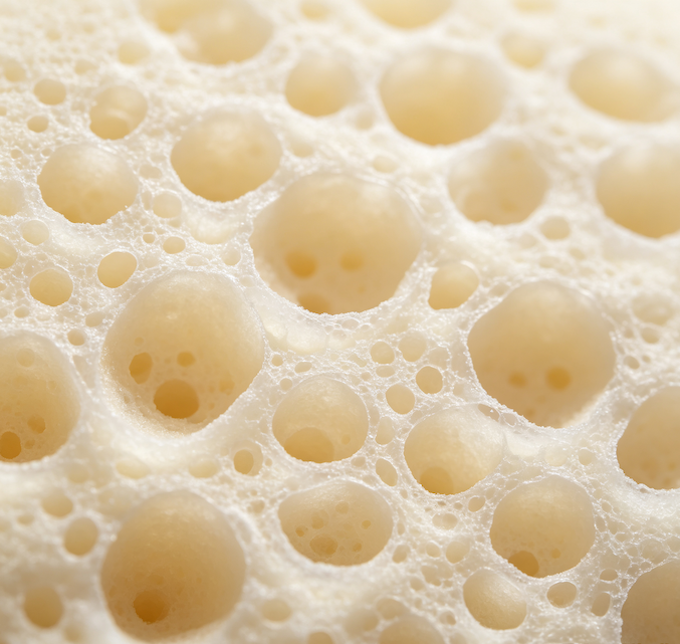
When the ratio of isocyanates (like MDI or TDI) is miscalculated, or when additives are loaded beyond necessary levels, the excess reactants do not complete the intended chemical reaction. These unreacted monomers become trapped within the foam’s intricate micro-cellular structure, creating persistent, stinging odors that are almost impossible to dissipate through natural venting.
2. Incomplete Foaming Reaction
If foaming temperatures, stirring speeds, or material temperatures fall outside specified ranges, the chemical reaction will be incomplete. Localized pockets of unreacted or partially-reacted intermediates form within the foam matrix. These substances are unstable and continually release faint "stuffy" or pungent smells as they degrade or volatilize slowly over time.High humidity in the production environment can trigger undesirable side reactions, further complicating the chemical landscape and exacerbating odor issues.
3. Inadequate Curing and Post-Treatment
Allowing the foam to cure for an insufficient duration, or at temperatures that are too low, prevents small residual molecules from fully escaping and solidifying. This is a crucial window for "baking off" potential odors.
Cutting and sealing products too early is a major pitfall. It traps any remaining volatile compounds within the closed cells, only for them to be released continuously during storage, transit, or after the product is unpacked, leading to the frustrating scenario where a product smells bad even after long periods of storage.
To genuinely solve the odor problem, manufacturers must adopt a holistic quality control strategy that addresses all three pillars. This includes:
Strict Raw Material Quality Assurance: Implementing rigorous vetting processes for all polyols and additives, prioritizing low-VOC formulations and verified raw material streams.
Precision Process Calibration: Continuously monitoring and calibrating all foaming equipment and environmental controls to ensure ideal and consistent reaction conditions.
Standardized Curing and Aging Protocols: Enforcing mandatory curing times and temperature profiles, and validating that products are fully stabilized before proceeding to cutting, finishing, or packaging.
By attacking odor at its source, manufacturers can not only resolve customer complaints but also significantly increase their odor compliance pass rates, enhancing overall product reliability and brand reputation.