common defects of spray polyol systems formulated with HFC-245fa
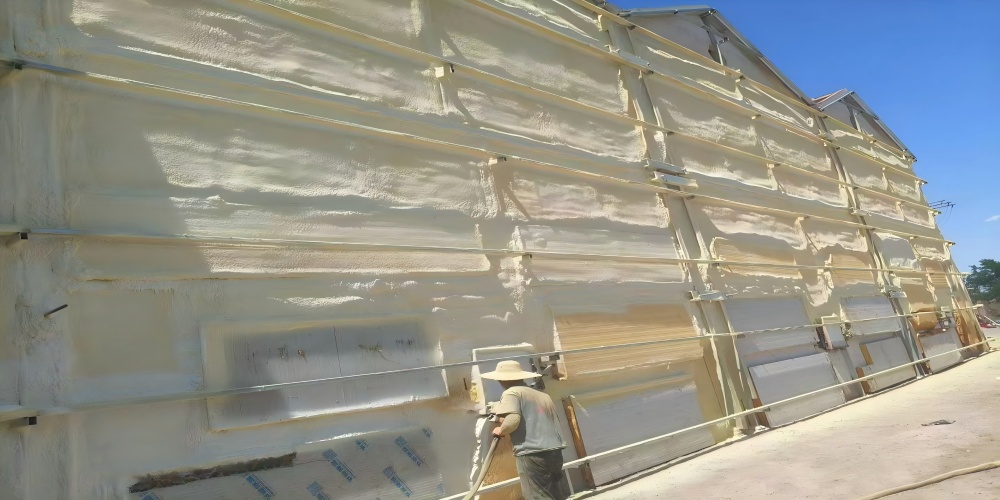
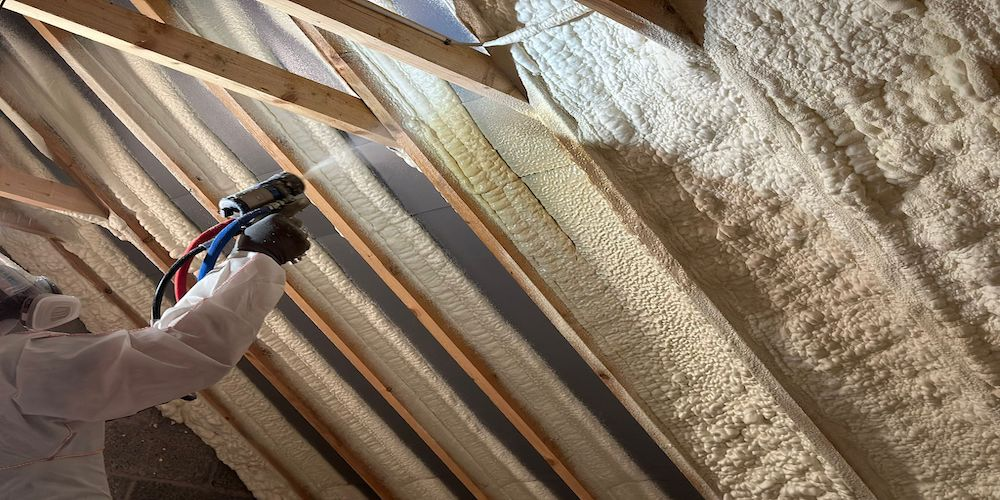
Starting from July 1, 2026, HCFC-141b blowing agent will be completely banned for spray polyurethane foam. As HFC-245fa/water become the mainstream blowing system, new technical challenges have emerged. Based on the practical experience of our construction technical team, we have summarized the 10 most common defects of spray polyol systems formulated with HFC-245fa, along with corresponding solutions:
1:Foam Shrinkage. The foam looks normal right after spraying but shrinks several hours later.
Cause: HFC-245fa has a boiling point of 15.3 °C, much lower than 32 °C of HCFC-141b, so it volatilizes rapidly at ambient temperature. Excessively high ambient temperature or low isocyanate index will cause the foam strength to develop slower than the gas expansion force. Solutions: Keep the temperature of polyol and iso between 25–30 °C (do not overheat); adjust the formula to raise the isocyanate index to 1.10–1.15.
2: Internal Scorching & Coking
Cause: Excessive water content leads to an internal reaction temperature exceeding 160 °C. Improper water dosage is the main issue for HFC-245fa/water systems.
Solutions: Limit water content to no more than 3.5 parts; spray in multiple layers for thick coating, with single layer thickness no more than 30 mm.
3: Brittle Foam & Surface Chalking
Cause: Improper mixing ratio of A/B components or incompatible combination of polyether and polyester polyols.
Solutions: Calibrate spray equipment to ensure the volume ratio is controlled at 1:1 ~ 1.2:1; appropriately increase the proportion of polyether polyol.
4: Surface Peeling & Incomplete Curing
Cause: HFC-245fa condenses and liquefies on cold substrates, which erodes the foam surface. Solutions: Preheat the substrate to above dew point before spraying; increase the dosage of amine catalysts.
5: Coarse & Uneven Cell Structure
Cause: Mismatched silicone cell stabilizer or insufficient mixing of raw materials.
Solutions: Adopt high-emulsifying silicone surfactants; inspect and clean blocked mixing chambers of spray guns.
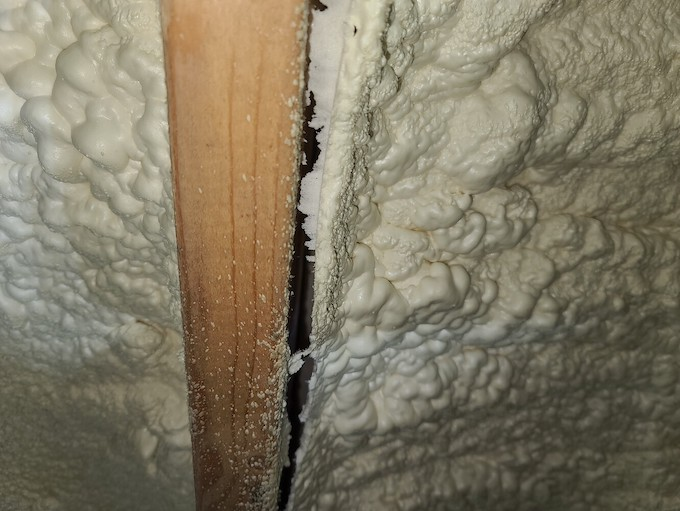
6: Large Density Deviation (Top vs. Bottom)
Cause: Due to its low boiling point, HFC-245fa migrates upward inside the hot foam.
Solutions: Reduce the initial temperature of polyol and iso components; add cell opener.
7: Fast Rise Rate & Poor Flowability
Cause: Imbalanced foaming and gelling reactions, or excessive amine catalyst addition.
Solutions: Optimize catalyst ratio and moderately increase trimerization catalyst.
8: Unstable Curing Speed (Slow Curing in Winter, Over-Fast Curing in Summer)
Cause: No seasonal adjustment on formulation.
Solutions: Increase catalyst dosage by 20%–30% in winter; reduce catalyst dosage in summer.
9: Cracking for Thick Spray Layers
Cause: Excessive thickness in a single spray results in concentrated internal stress.
Solutions: Control single-pass thickness within 15–25 mm; add trimerization catalyst to enhance cross-linking.
10: Poor Adhesion to Substrates
Cause: Oil stains, dust or frost on the substrate surface.
Solutions: Thoroughly clean the substrate; apply primer prior to spraying.
Have you encountered any other problems during spray construction? Feel free to share and discuss!